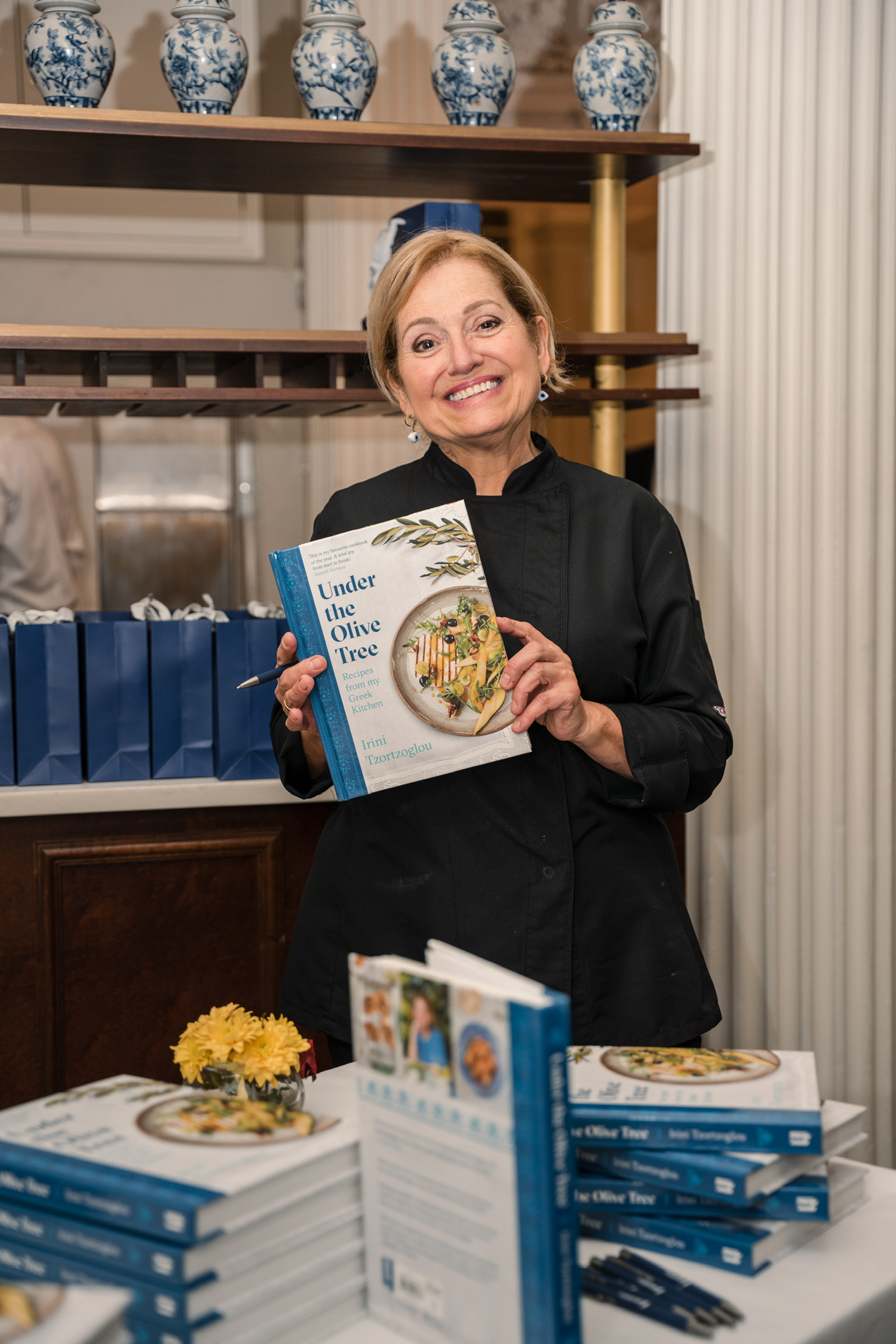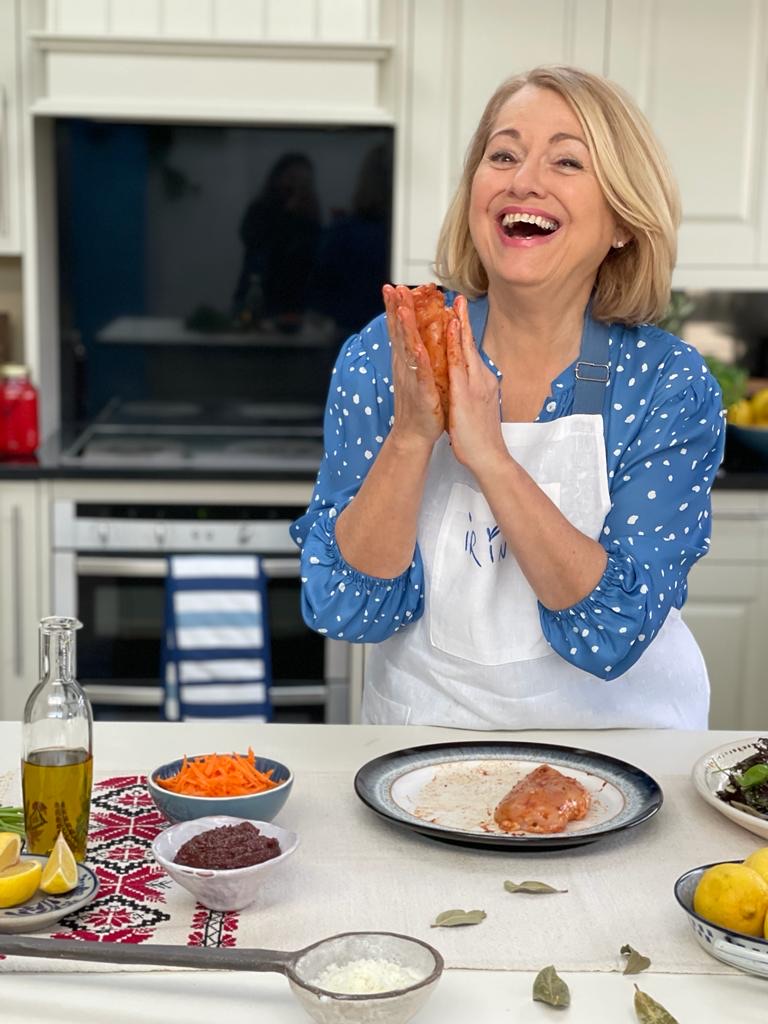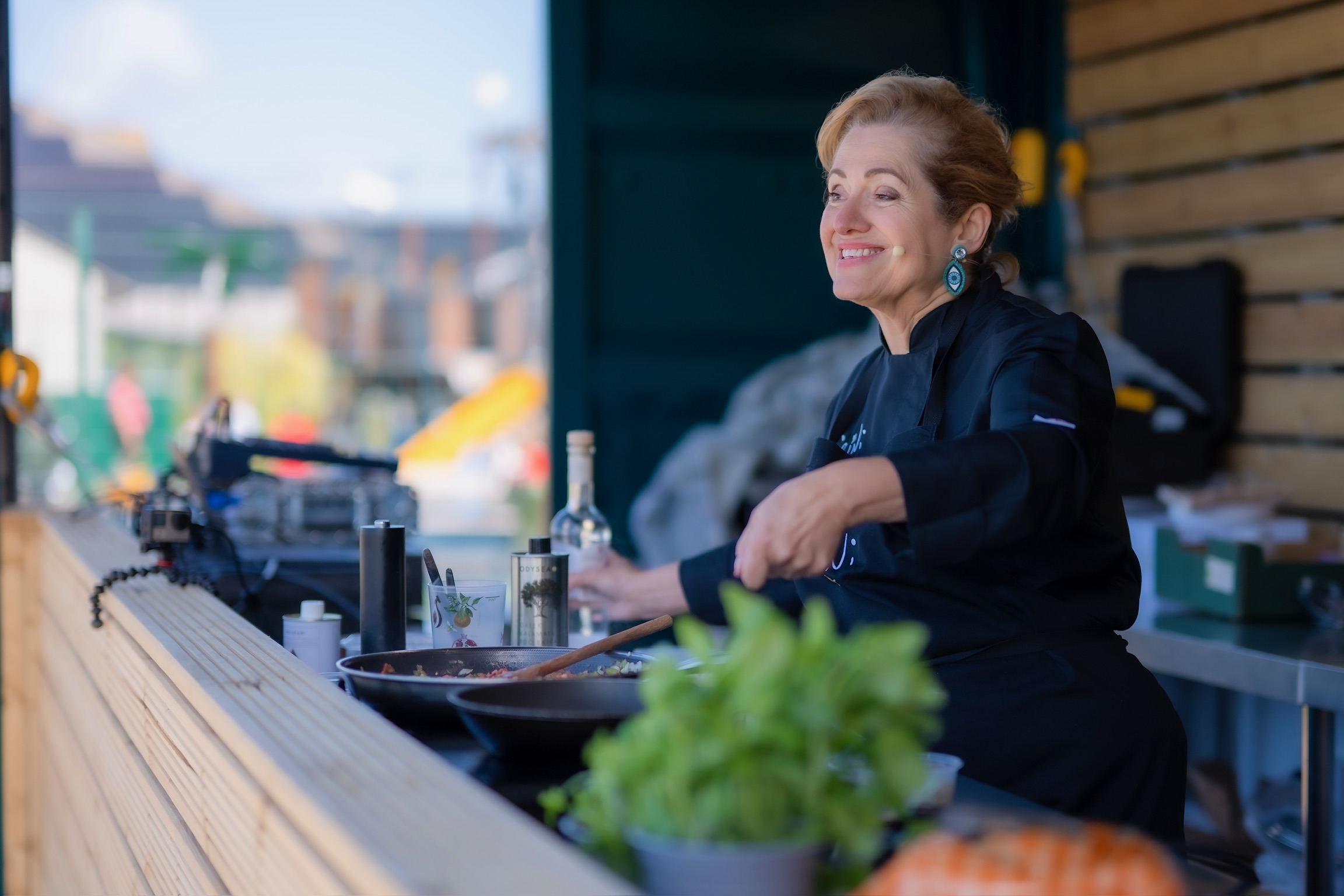
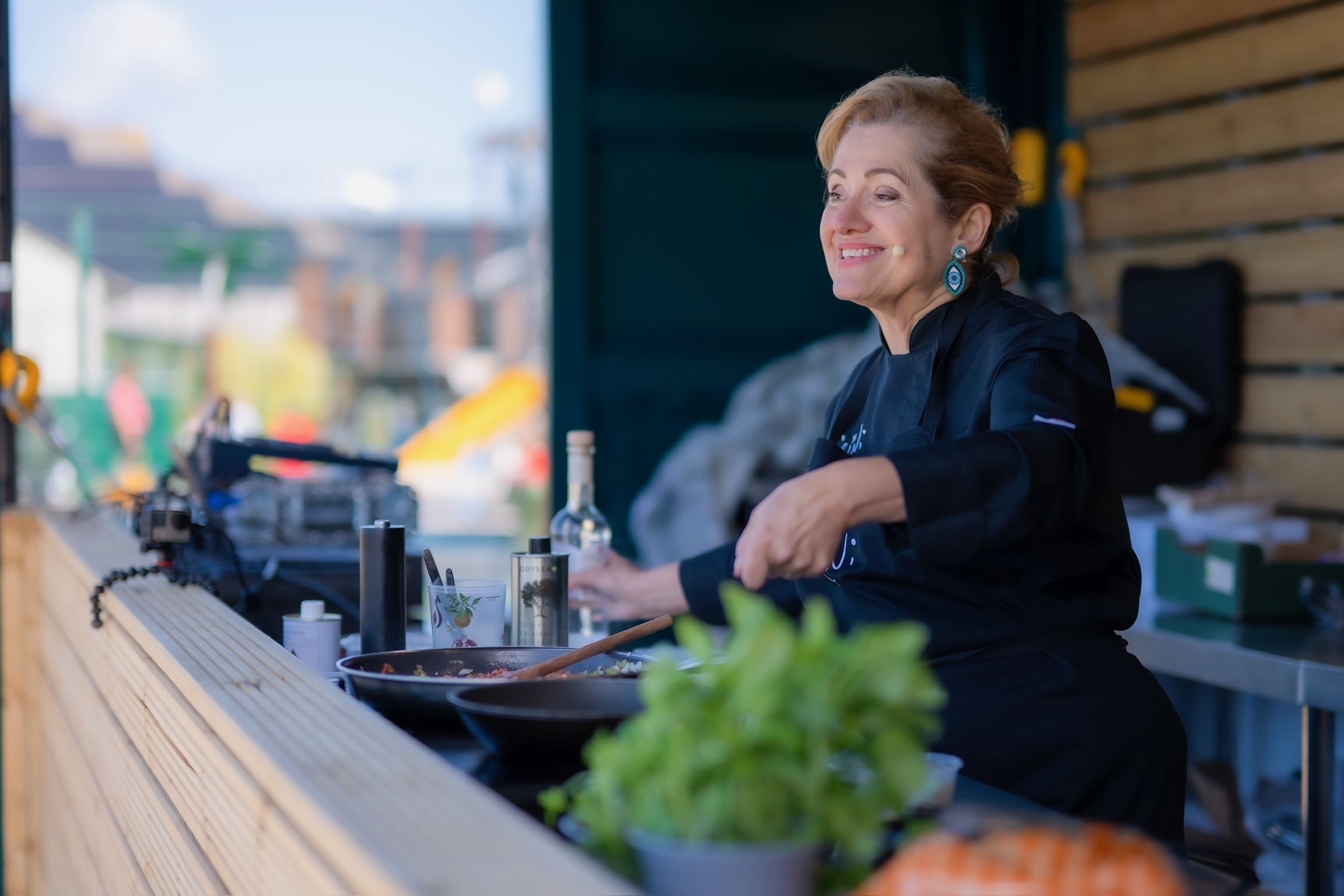
From a small village in Crete to the kitchens of MasterChef UK, her journey is a beautiful reminder that it is never too late to discover a new passion and reinvent yourself.
Raised in a community where food was deeply rooted in tradition, seasonality and the art of sharing, she grew up learning the value of resourcefulness, generosity and bringing people together around the table. After more than 30 years working in banking in London, she embarked on an unexpected new chapter, winning MasterChef UK in 2019 at the age of 60.
Today, she draws on her Cretan heritage to celebrate the profound connections between food, memory, culture and identity. Through her culinary experiences and hosted retreats, she invites people to discover not only the flavours of Greece but also the stories, traditions and human connections that make food so much more than what we eat.
In this conversation, she reflects on the childhood memories that shaped her, the courage to embrace new beginnings, and the enduring power of food to bring people together, at any stage of life.
You grew up in a small village in Crete, surrounded by food, traditions, and a strong sense of community. What are the earliest food memories that still live with you today, and how have they shaped the woman and cook you became?
Foraging for food was very important to both my family and the wider community. I think it would have been inconceivable to be surrounded by so much free, delicious and healthy food and not make use of it.
Mushrooms and snails arrived with the first rains, wild greens in winter and spring, berries, nuts and fruit in their seasons, fish and seafood, game such as hare and partridge, and of course an abundance of wild herbs.
Preserving was equally important because when things were in season, they were often plentiful. Nothing was wasted. Take the grapevine, for example. The leaves that were removed to allow sunlight to reach the grapes became dolmades.
Unripe grapes were pressed to make verjuice, while ripe grapes were eaten fresh, were pressed for wine and distilled for raki and preserved as spoon sweets to offer guests during the winter months, or dried as raisins to provide energy or use in cakes.
Preparing, cooking and baking food together were also central to village life. The communal wood-burning oven was heated with wood contributed by the villagers, and the women would gather to bake their bread, exchanging news, sharing worries and enjoying each other's company while their loaves baked. It was the earliest form of group therapy I ever knew!
Growing up surrounded by this resourcefulness, generosity and sense of community shaped not only the way I cook but also the way I live.
I learnt to respect ingredients, waste as little as possible, make the most of what nature provides and, above all, appreciate the pleasure of preparing food with and for others and sharing it with them.
You spent more than 30 years living in London before taking a completely new direction in life. What made you realise that it was time to reinvent yourself, and what gave you the courage to take that leap?
I was brought up to believe that the older members of a family had a great deal to offer, and I saw them do so with love and generosity. I wanted to follow their example, and food seemed to me one of the most natural ways of showing love, nurturing others and bringing people together.
At the same time, I wanted to show the younger members of our family that life doesn't stop offering opportunities simply because we reach a certain age. As long as we are alive, well and curious, there are new things to learn, experience and enjoy.
Having spent over 30 years working in banking, I think I had a great deal of pent-up creativity waiting to find an outlet. That is not to say I hadn't explored my creative interests during those years.
I studied history of art, learnt about interior design and became involved in amateur theatre, among other things. But there was always so much more I wanted to do.
I inherited a very strong work ethic from my mother, along with a zest for life for which I feel enormously grateful. So, when retirement came, I never saw it as a time to stop. I saw it as an opportunity to continue learning, contributing and perhaps doing things I had never previously considered possible.
I don't think it was so much a question of finding the courage to reinvent myself. It was more a question of allowing myself to become all the things I hadn't yet had the time or opportunity to be.
Winning MasterChef UK in 2019 changed the course of your life. Looking back, what did that experience teach you about yourselfnot just as a cook, but as a woman?
It taught me that success rarely comes to us because we are good at just one thing. To this day, I am not sure that it was just my cooking that won me the trophy.
I saw others whom I believed to be better cooks than me to be eliminated because they had displayed inability or resistance to being a team player, who showed disrespect to ingredients to their fellow contestants or the production team and even order and cleanliness played a part. I also discovered that we are all better than we think we are. Before MasterChef I thought that I could not cook without following a recipe. And yet, my best performance was when I was thrown at the deep end of unknown tasks.
I realised and am grateful for this discovery which I share with my retreat guests and everyone I have a chance to speak with that all the memories of my childhood in my grandmothers’ and mother’s kitchen were there.
That a lot of knowledge had been absorbed by just been present.
As a woman, it also taught me something important. So much of our lives is spent fulfilling roles and meeting the needs and expectations of others, whether as daughters, wives, mothers or professionals, that we sometimes forget to ask what we might still be capable of achieving for ourselves.
Winning MasterChef at 60 reminded me that age does not diminish our potential and that it is never too late to put ourselves first, take a chance and surprise even ourselves. I hope that, in some small way, my experience encourages other women to do just that.
Your cooking seems to be about much more than recipes. You speak about food as memory, identity, culture, and connection. What do you believe happens around a table that cannot happen anywhere else?
I have always believed that food does much more than nourish our bodies. As I was growing up, I saw that food brings people together, creates a sense of belonging and often opens the door to conversations that might otherwise never take place.
And now, I see this very same thing I witnessed round my grandmother’s long table during my own hosted culinary journeys. People arrive from different backgrounds, sometimes as complete strangers, and yet within a day or two, something rather wonderful happens.
Sitting around a table, sharing dishes, passing plates, talking about ingredients and exchanging stories, they begin to find connections. A particular flavour might remind someone of their mother's cooking, a childhood holiday or a person they loved.
Before long, memories are being shared, laughter follows and friendships begin to form.
My friend, the psychotherapist Stelios Kiosses, explores this relationship between food, emotions, memory and identity in his book Culinary Psychology, for which I had the pleasure of writing the foreword.
It helped me understand, from a psychological perspective, something I had instinctively known since childhood: our relationship with food is about so much more than satisfying hunger.
I think there is also something important about the equality of a shared table. Whatever our backgrounds, professions, ages or circumstances, we are all simply people enjoying food and one another's company.
We listen, we laugh, we sometimes reveal things about ourselves that we might not share in a more formal setting.
For me, this is the true meaning of hospitality, or filoxenia as we call it in Greece. It isn't simply about feeding people well. It is about making them feel welcome, valued and part of something. And I can think of few better places for that to happen than around a table.
You have carried your Cretan heritage with you while building a life and career in Britain and now the Lake District. How has living between cultures influenced the way you cook, create, and see the world?
I think living between cultures has been one of the greatest privileges of my life. I left Crete for London when I was 22, taking with me the values, traditions, tastes and memories of my childhood.
But I was also young, curious and eager to experience everything that a much bigger world had to offer.
London opened my eyes to an extraordinary diversity of people, cultures, cuisines and ways of thinking. I encountered ingredients I had never seen before, tasted foods I couldn't have dreamt of growing up in a small Cretan village and learnt that there are countless ways of doing things, none necessarily better than another.
I think this has had a profound influence on the way I cook. My Cretan heritage remains the foundation of everything I do. It taught me to respect ingredients, appreciate seasonality, waste very little and understand that good food does not need to be complicated.
But living in Britain, travelling extensively and experiencing other food cultures have given me the confidence and curiosity to experiment, borrow ideas and make them my own. I have never felt that remaining faithful to my culinary heritage meant I couldn't embrace something new.
Living in the Lake District has added another dimension to this. I find many similarities between the rural communities of Cumbria and the Crete of my childhood.
There is a strong connection to the land, pride in local produce, a respect for traditional skills and an appreciation of the people who grow, rear and make our food. These are values I recognise and feel very comfortable with.
But perhaps the greatest influence has been on the way I see the world. Living between cultures teaches you that difference is something to be curious about rather than afraid of. It also makes you question your own assumptions.
Things you grew up believing were the only way of doing something turn out to be just one of many possibilities.
I feel very Greek and very much at home in Britain. I don't see those two identities as competing with each other. One gave me my roots and the other gave me opportunities to grow. Both have made me the person and the cook I am today.
You are an author, olive oil and honey sommelier, columnist, retreat host, and mentor through your food experiences. What does your vision for the next chapter of your journey look like, and is there something you still dream of doing?
I am actually very happy doing what I do, so perhaps my answer is that I would simply like to do more of it! To continue travelling, cooking, writing, learning, meeting interesting people and sharing what I know with others. I don't feel a particular need to reinvent myself again.
There is still so much that interests me and so much I would love to experience.
One ambition very close to my heart is to write a second book, this time more of a food memoir. I see it as a tribute to all those who fed me, nurtured me and taught me, often without realising how much they were passing on.
Through stories, ingredients, utensils, traditions and recipes, I would like to preserve something of a way of life that is gradually disappearing. In many ways, it would be my way of thanking those people and ensuring that their knowledge and values are not forgotten.
I have also long dreamt of travelling through rural communities, particularly in Crete and in Cumbria, with a camera, recording the lives of people who still work the land and produce food with the values and ethics I grew up with.
Their lives are increasingly challenging, and I feel there is something very important about documenting their knowledge, resilience and relationship with the land while we still can.
And, of course, I want to keep learning! Having qualified as an olive oil and honey sommelier, I would love to study sake and tea.
During my recent travels in Japan, I developed a particular interest in matcha, which made me realise how little I knew about the extraordinary world of tea and how much there is still to explore.
So, I suppose my ambitions are not about achieving something bigger or more impressive. They are about going deeper into the things I already love, satisfying my curiosity, preserving knowledge worth passing on and continuing to share experiences with others.
I have never believed that we reach an age when we have learnt enough, seen enough or contributed enough. And I sincerely hope I never lose the desire to do all three.
Your hosted culinary journeys bring people together through cooking, storytelling, and shared meals. What have the people you have met on these journeys taught you about food and about human connection?
I think one of the most important things these journeys have taught me is just how much we all need to feel connected, appreciated and valued. We need to be listened to, to feel that our experiences matter and that we have something worthwhile to contribute.
I see this need in people of all ages and backgrounds, and perhaps particularly in those who have spent much of their lives caring for others.
What I find fascinating is how naturally food helps meet those needs. Cooking together, sitting around a table, sharing stories and enjoying a meal seem to remove many of the barriers that can exist between people.
Conversations flow more easily, people become more comfortable with one another and friendships develop. I have watched guests arrive as complete strangers and leave with a genuine affection for one another and plans to join a future journey.
But something else happens that I find equally rewarding. I often see people rediscover their enthusiasm for cooking and caring for themselves.
They begin to think differently about what they eat, the ingredients they buy and the pleasure that can come from preparing even a simple meal with care.
They return home wanting to cook more, eat better, invite friends around their tables and perhaps make a little more time for themselves and the people who matter to them.
And I think that is particularly important. Feeding ourselves well is an act of self-respect, just as feeding others is an expression of love and generosity. Neither needs to be complicated or expensive.
Sometimes it is simply a matter of giving food and the occasion of sharing it the attention they deserve.
My guests have taught me that, however different our lives may be, our emotional needs are remarkably similar. We all want to belong, to be heard, to be appreciated and to have something to look forward to.
If the experiences we share on my journeys give people a renewed enthusiasm for looking after themselves and bringing others together, then I feel I have achieved something truly worthwhile.
And I find that incredibly gratifying. It is one of the greatest rewards of what I do.
You reinvented your life at a stage when many people might feel it is “too late” to start again. What would you say to someone who feels they have missed their opportunity or is afraid to begin a completely new chapter?
I would tell them exactly what I tell people who are afraid to experiment with food. What is the worst that can happen?
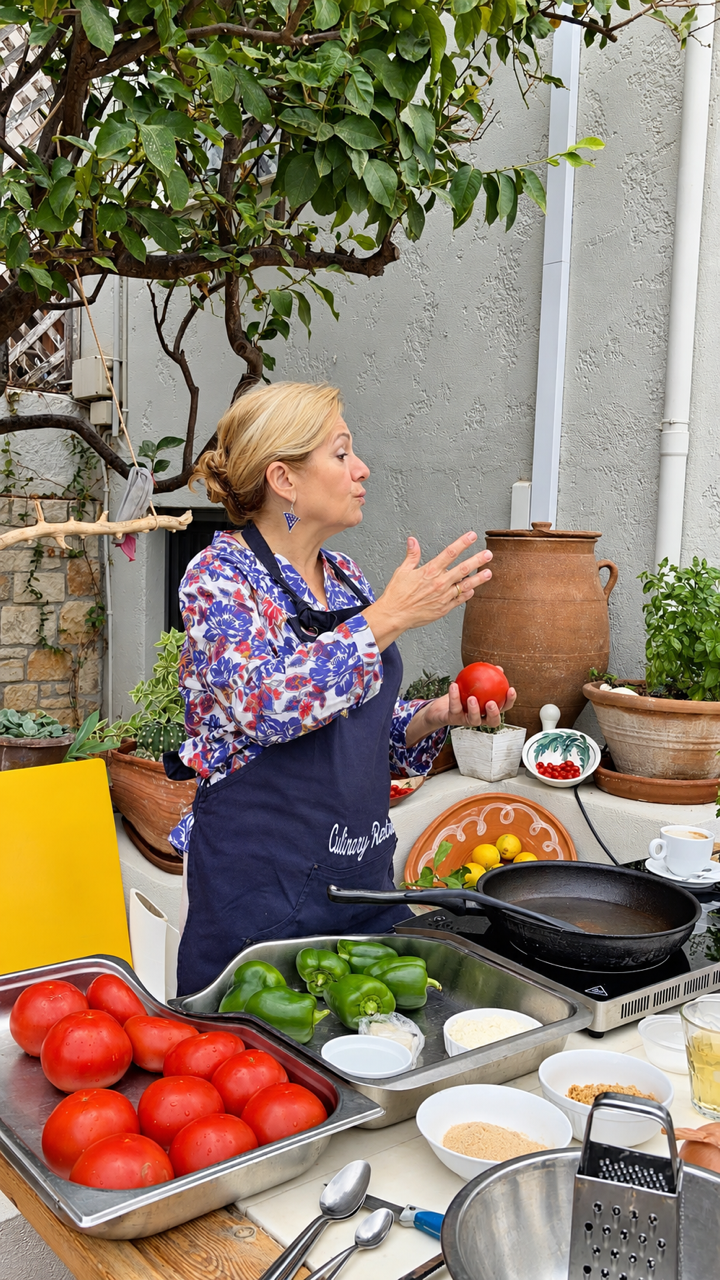
Some of my culinary journey guests arrive declaring with absolute conviction that they cannot cook. By the end of the week, they are full of enthusiasm, eager to get home, try new recipes, experiment with ingredients and, most importantly, have fun in the kitchen.
Mind you, I generally make the person who makes the strongest declaration about their inability to cook my sous chef!
I think the same principle applies to life. We are often held back not by a lack of ability or opportunity but by our fear of failure, of making mistakes or of stepping outside what is familiar. Yet making mistakes is how we learn, and not everything we attempt has to be a success to be worthwhile.
I also think we give far too much importance to age. The years we have lived have given us knowledge, experience, resilience and, hopefully, a better understanding of ourselves. Why shouldn't we put all that to good use by trying something new?
I would never suggest that everyone needs to make a dramatic change or reinvent themselves. Sometimes a new chapter begins with something quite modest: learning a skill, pursuing an interest, travelling somewhere unfamiliar or simply saying yes to an opportunity we might previously have turned down.
And if things don't work out quite as we hoped, we will have learnt something along the way. I would much rather look back on something I tried that didn't work than spend my life wondering what might have happened if I had given it a go.
For younger women who have a dream but may be held back by fear, self-doubt, expectations, or the pressure to follow a conventional path, what would you want them to hear from you today?
I would tell them first of all to believe in themselves and not allow other people's expectations to determine the course of their lives. Listen to advice, certainly, but remember that ultimately it is your life to live and your choices to make.
I would also encourage them not to be so afraid of making the wrong decision. I firmly believe that every experience serves a purpose, even if we cannot see it at the time.
Some experiences bring us happiness and fulfilment, while others test us, teach us resilience and equip us with skills we may not appreciate until much later.
I spent over 30 years working in banking, and there were many times when I wasn't particularly happy or fulfilled. Yet that career gave me financial independence, introduced me to my husband and equipped me with skills that have proved invaluable in everything I have done since.
Without those years, I might not have been able to pursue the life I enjoy today.
So I would tell young women not to become disheartened if their journey doesn't unfold as they had hoped. A job that doesn't fulfil you today need not define the rest of your life.
Equally, don't allow the security of what is familiar, or the fear of disappointing others, to stop you from exploring what might make you happier.
Be curious, develop your abilities, seek financial independence, surround yourself with people who encourage rather than limit you, and don't be afraid to change direction when the opportunity presents itself.
Above all, remember that you don't have to have your entire life worked out at 25 or 35. Your dreams may change as you change, and that is perfectly all right. What matters is that you continue to make choices for yourself rather than allowing fear to make them for you.
If you could sit down with the younger Irini, the girl growing up in Crete who could not yet imagine where life would take her, what would you tell her about dreams, courage, failure, success, and trusting her own path?
I would tell her to have courage and to trust that her life has a purpose, even if she cannot yet see what that purpose might be. To believe in herself, remain curious and open to whatever life brings, and never allow fear or disappointment to extinguish her enthusiasm for living.
I would tell her that life will not always go according to plan, that there will be failures, disappointments and occasions when she will question her decisions or her abilities. But I would encourage her not to lose heart.
What seems like a failure today may prove to be an important lesson tomorrow, and what appears to be a diversion from her chosen path may lead her somewhere far more interesting.
I would tell her not to measure success simply by achievements, recognition or material possessions, but by the relationships she builds, the kindness she shows, the opportunities she takes to learn and the contribution she makes to the lives of others.
And I would urge her to remain appreciative. To practise gratitude, not just when life is going well but also during its more difficult moments. To recognise the generosity of others, to appreciate the opportunities she is given and never to take for granted the people who love and support her.
Perhaps most importantly, I would tell her to hold on to the values she learnt in that little Cretan village, while keeping her mind and heart open to a world far beyond it.
She doesn't need to know where life will take her or have all the answers. She just needs the courage to take the next step, the curiosity to see where it leads and the determination to keep going.
And I think I would give her a big hug and tell her that she has a wonderful life ahead of her.
Not one without difficulties or sadness, but one richer and more fulfilling than she could possibly have dreamt of as a little girl in Crete.