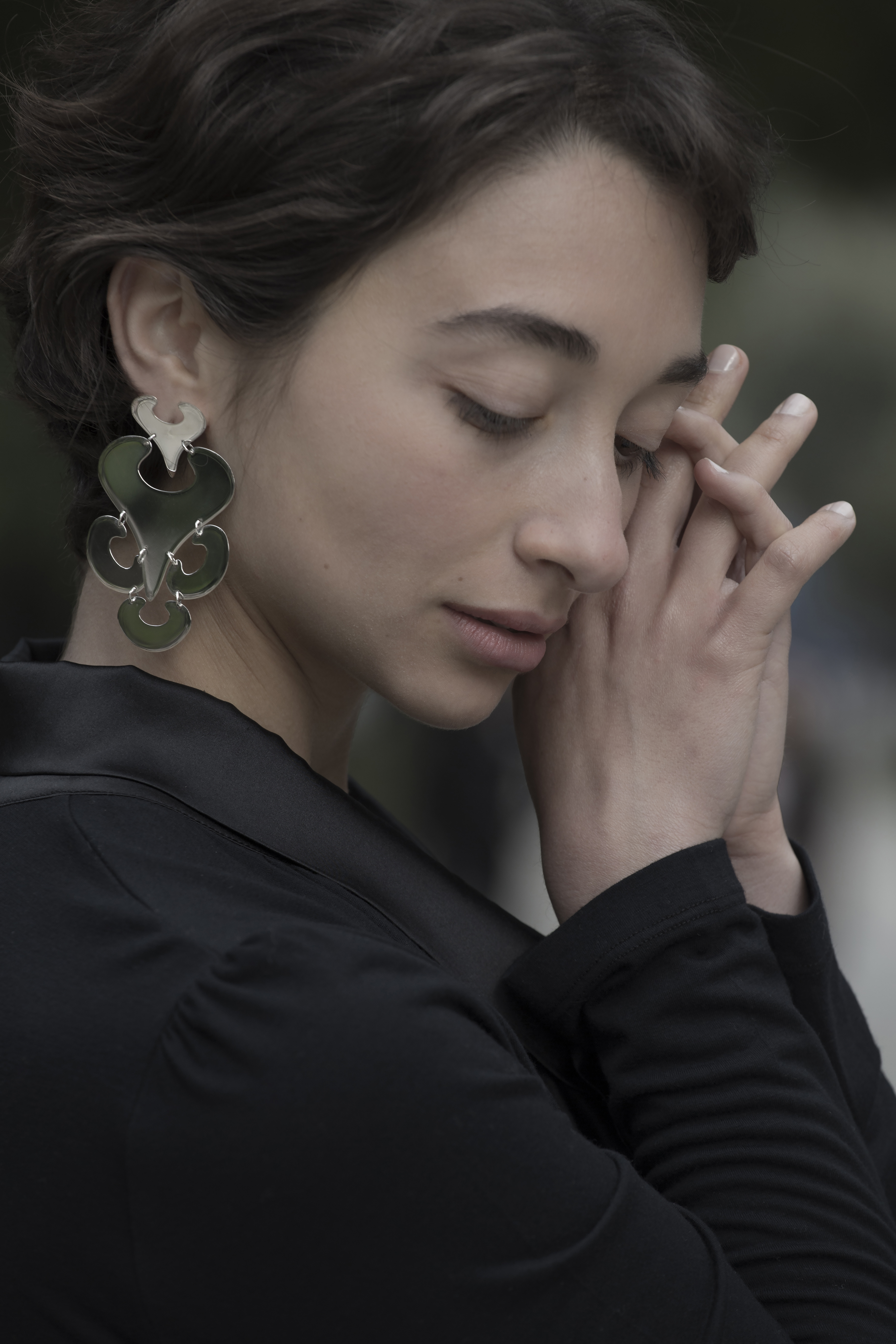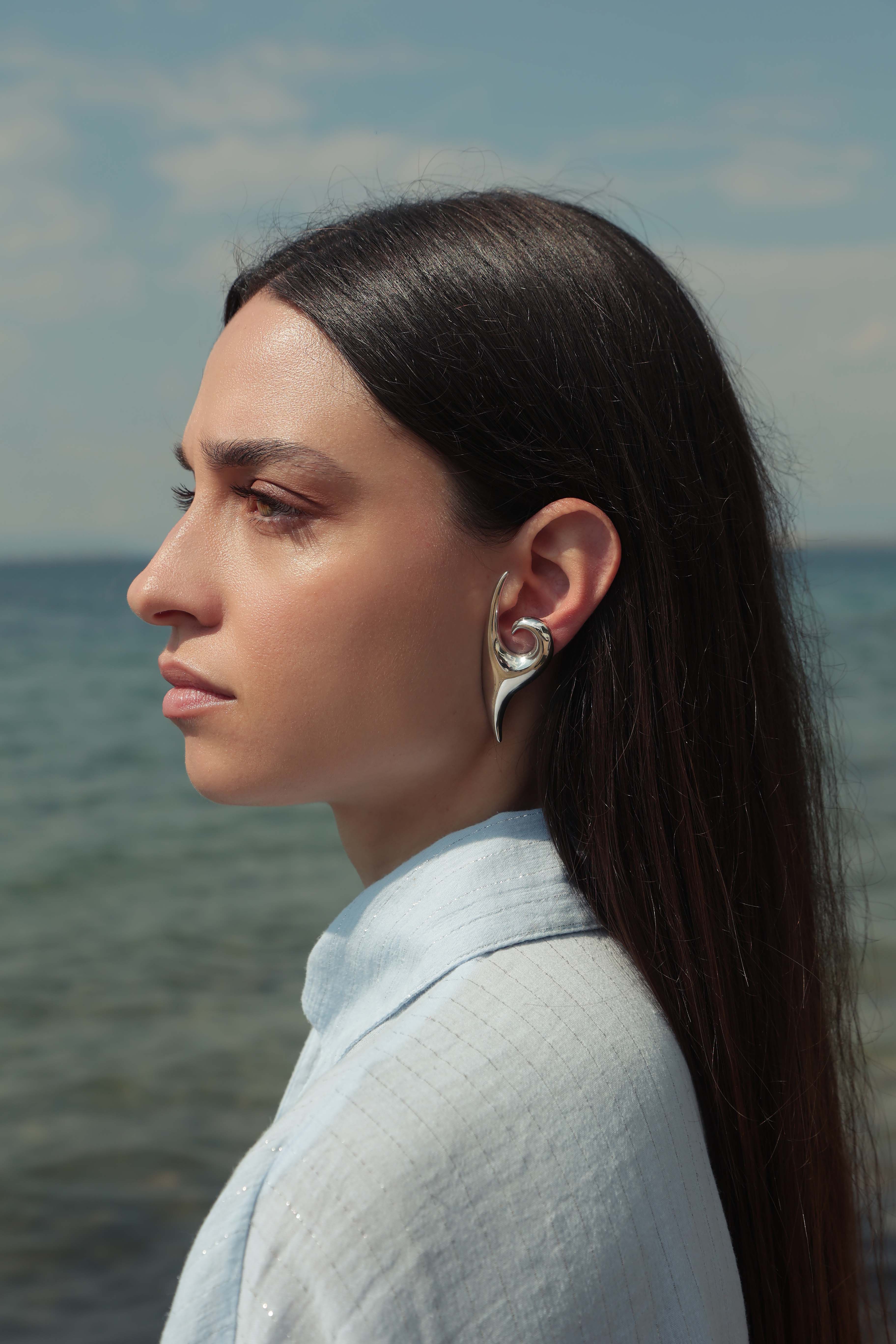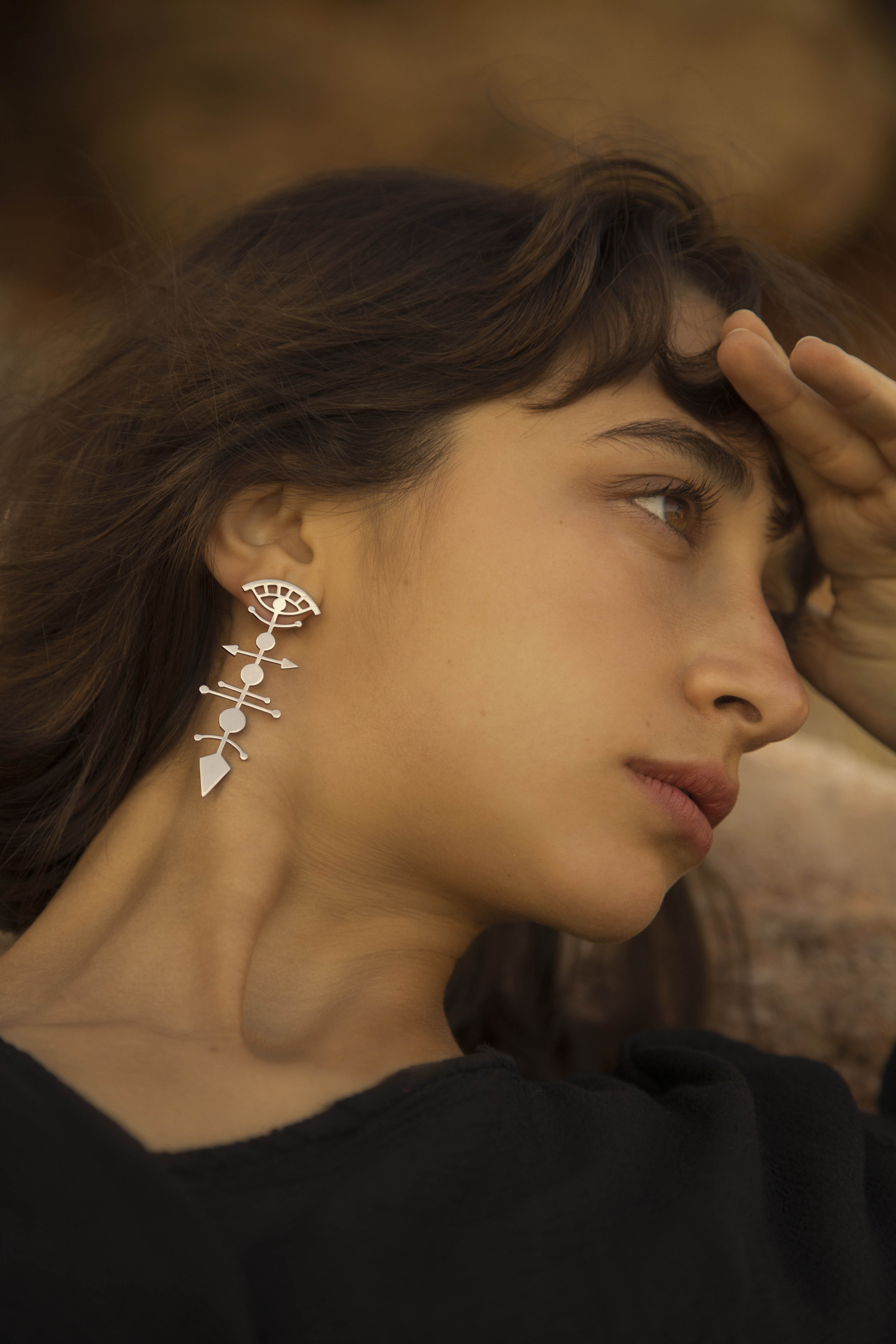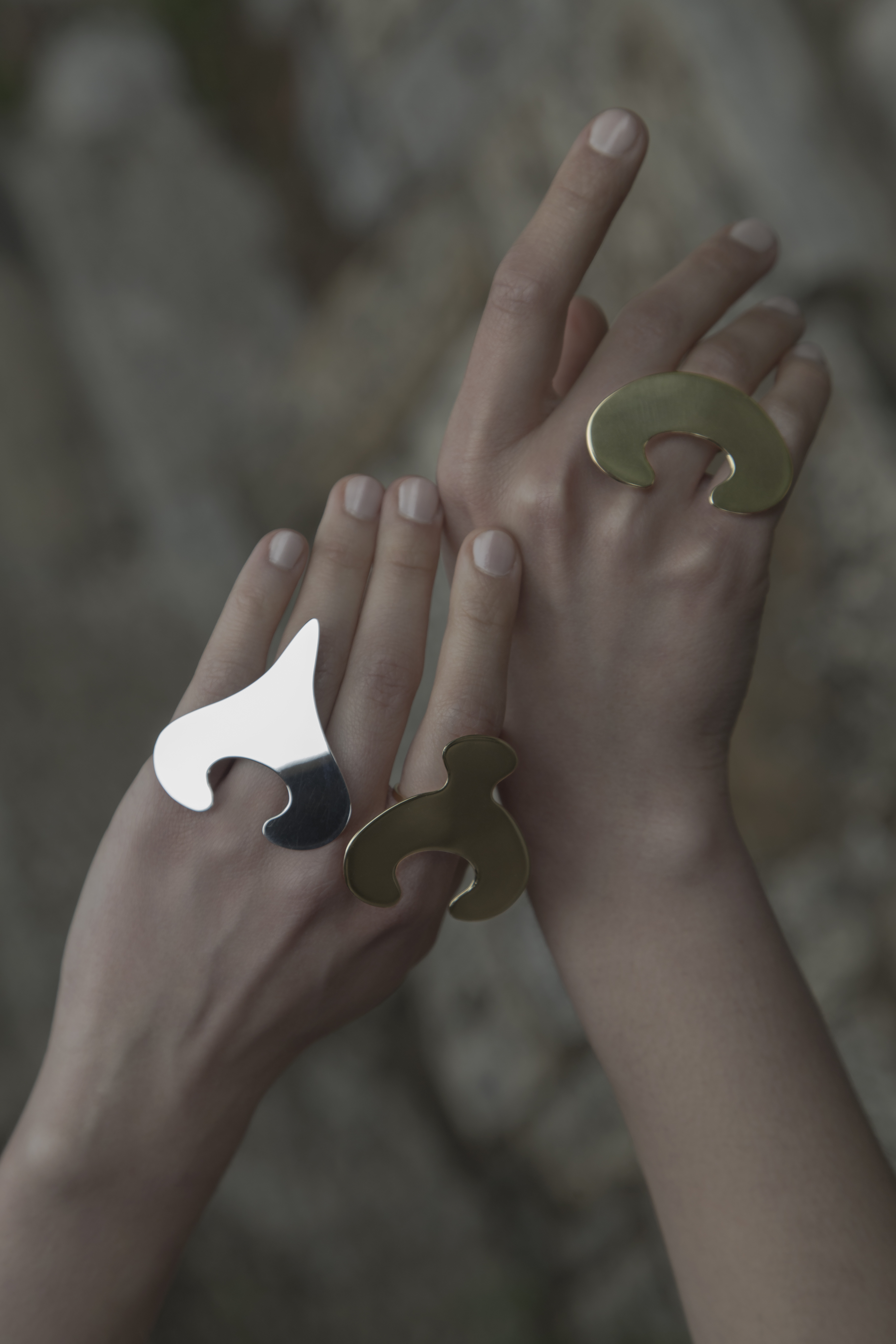

Across the contemporary Greek art scene, jewellery is no longer confined to ornament. For a new generation of female designers, it has become language: a way to speak about identity, memory, society, ritual and the body itself.
Among the creators shaping this evolving landscape is Sofia Zarari, an artist whose journey reflects the transformation of jewellery from decorative craft into multidisciplinary artistic expression.
Born creatively between Athens and Rome, Zarari first approached the world through the lens of political and social thought.
Her studies in Political Science in Athens preceded her training in jewellery design and wax modelling, a combination that would later define the intellectual depth of her artistic practice.
Rather than following a conventional route within luxury jewellery, she gradually developed a personal visual vocabulary where jewellery became both object and statement.
Since the late 1990s, she has worked within the field of fine jewellery while participating in major European exhibitions, absorbing influences from different artistic movements and cultures.
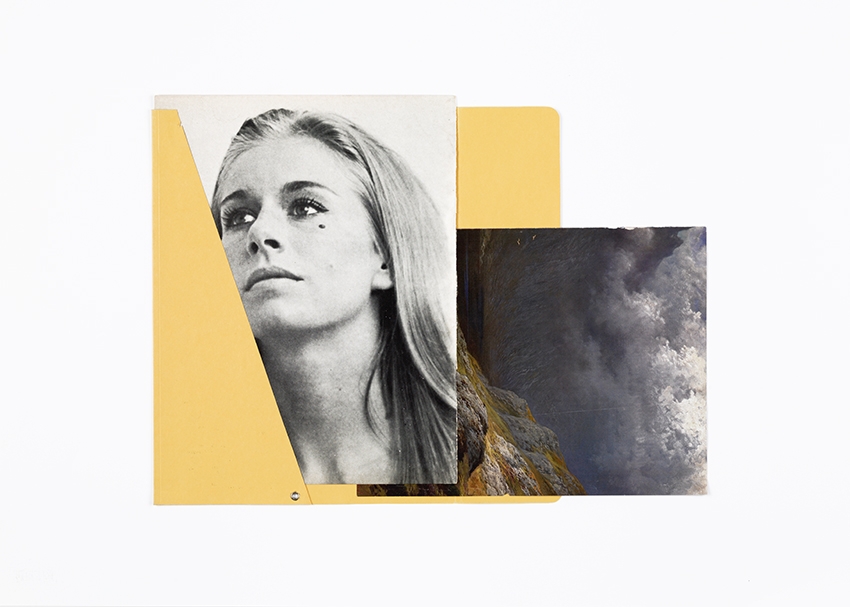
Yet what distinguishes her work today is the way she moves beyond traditional definitions of jewellery design. Drawing from collage, assemblage and contemporary visual art practices, she treats materials not merely as precious matter but as carriers of meaning and memory.
This shift mirrors a broader movement among female Greek jewellery designers of the last two decades.
Many contemporary Greek women creators no longer view jewellery simply as adornment linked to status or elegance. Instead, they approach it as a conceptual medium connected to social experience, mythology, gender, migration, ritual and collective history.
Their studios function almost like laboratories of storytelling, where metal, stone, textile and found objects coexist with philosophy, anthropology and performance.
In Greece ( a country where ancient symbols still silently inhabit everyday life ) contemporary jewellery artists often negotiate between heritage and modernity.
Designers such as Sofia Zarari belong to a generation that reclaims traditional symbolism without becoming trapped by folklore. Ancient forms, ritual gestures and archetypal motifs appear in transformed ways: fragmented, reinterpreted, questioned.
Through this process, jewellery becomes less about decoration and more about cultural dialogue.
Zarari’s artistic evolution reflects precisely this tendency. In recent years, her focus has increasingly turned toward the social dimension of art.
Her practice extends into performance, movement and spoken word, exploring how the body itself can become a site of memory and communication.
By engaging with symbols and primal cultural practices, she attempts to decode hidden meanings that continue to shape human behaviour across time.
Equally important is her relationship with language. Alongside her visual work, writing has emerged as another form of artistic expression.
Her texts, published both independently and in connection with exhibitions, reveal an artist interested not only in creating objects but also in generating discourse.
This interdisciplinary approach is becoming increasingly characteristic of contemporary female artists in Greece, many of whom refuse the limitation of a single artistic identity.
The launch of her label MYSTiS by SOFIA ZARARI in 2018 marked another chapter in this dialogue with the public. The name itself evokes mystery, ritual and inner transformation, themes that resonate deeply within her broader artistic universe.
Through wearable pieces and visual projects alike, she continues to investigate the invisible emotional and symbolic layers hidden beneath material surfaces.
What makes today’s Greek female jewellery designers particularly compelling is their ability to merge intimacy with universality.
Their work often begins with personal reflection but expands toward collective concerns: the female body, social fragmentation, spirituality, environmental anxiety, displacement and the search for belonging in an unstable world.
Jewellery becomes a portable form of thought, something carried on the body yet connected to wider cultural narratives.
Within this context, Sofia Zarari stands as an artist who continuously crosses boundaries: between jewellery and sculpture, object and performance, aesthetics and social inquiry.
Her work demonstrates how contemporary Greek jewellery design is entering a new era , one where women artists are redefining the field through intellectual depth, experimentation and emotional resonance rather than through conventional notions of luxury alone.
Today, Greek contemporary jewellery is increasingly recognised internationally not only for craftsmanship, but for its conceptual courage.
Artists like Sofia Zarari contribute to this dynamic shift, proving that jewellery can still hold mystery, provoke reflection and create human connection in an age saturated with images and consumption.